From a Secret Bunker to the Wilderness Road: Why Context Matters

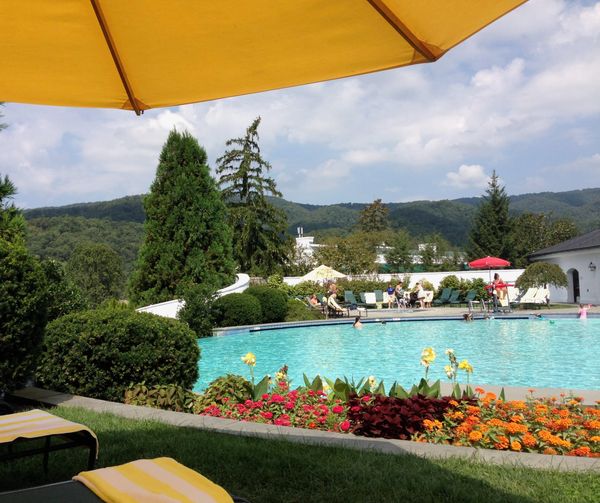
Several years ago, my husband and I were with a group of businesspeople staying at the Greenbrier Resort in White Sulphur Springs, West Virginia. I really had not heard much about this place. Looking up their website, I saw that it was a resort built around the area's natural mineral springs, whose mineral-rich waters had been used for medicinal purposes by wealthy Virginians since the 1830s. The Allegheny Mountains served as the backdrop, with the large historic "white" building as the resort's focal point, along with lush, beautifully landscaped flowers, shrubs, and trees! However, there was another fact about this resort that was not known until after 1992. It had a secret underground bunker built between 1958 and 1962, which was intended to house and protect the U.S. Congress in the event of a nuclear attack!
This huge secret has involved many people over the years and still does! Did your family live near the Greenbrier, work there, or visit during those years? Were any of them part of this secret plan — Cabinet members, senators, representatives, aides, or military personnel? And while Congress was quietly preparing for survival, what about the rest of us? Did our families, schools, churches, or businesses have any plan at all? The threat of a nuclear war or attack has been prominent during my lifetime, so will my descendants understand the context of this time for me? What about AI, pollution, the Afghanistan War, iPhones, digital voting, and others?
This is why, when I do research, I try to learn more about the context of my ancestors' lives to better understand their daily existence, decisions, and documentation.
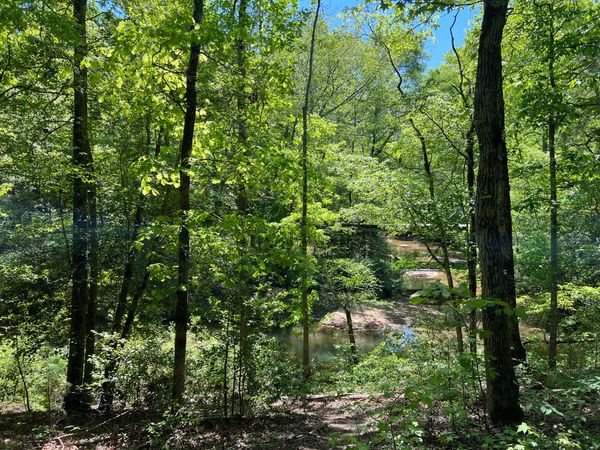
I first mentioned the Allegheny Mountains as a backdrop to the Greenbrier Resort. It is part of the context of my visit. It is also part of the context of my ancestors' passage through this area. My Maryland ancestors (French, Duvall, Cissell, and Riney) would have traveled along the Allegheny Mountains on their way to Kentucky along the "Wilderness Road." The road was steep and narrow, and wagons were too wide for roads before 1796.[1] People walked because their packhorses were usually heavily loaded with essential items they would need on the frontier, such as rifles and ammunition, cast-iron cookware, farm tools (axes, plows, hoes), seeds, clothing, and preserved food staples. And, hopefully, there would be some hunting and fishing along the way to supplement their food needs. When you add in the context where they came from, St. Mary's County in Maryland, which is flat-to-rolling farmland and tidal marshes. One could hardly blame them for wanting to turn back — but they didn't. They kept going until they reached Kentucky and their new home! And learning just this bit of context gives me more appreciation for my ancestors about what they sacrificed to make a better life for themselves and their children!
Beverly Whitaker, "The Wilderness Road," archived freepages, Rootsweb (https://freepages.rootsweb.com/~gentutor/genealogy/Wild.pdf : accessed 24 March 2026). ↩︎
Written by
What's Next?
Leaving Minonk
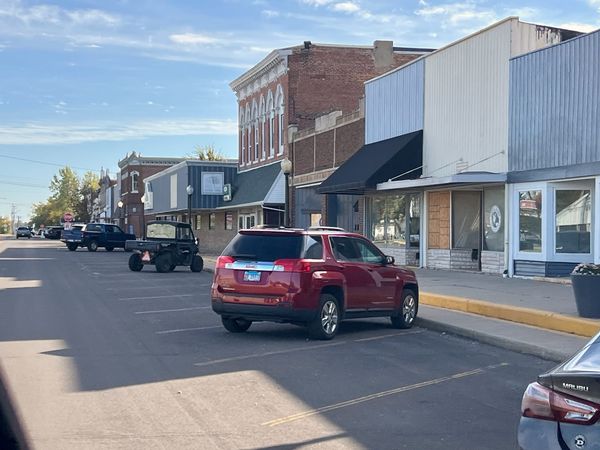
The Eiben Family and the Road to Texas In the 1880s and 1890s, Minonk, Illinois, sat at the junction of multiple major rail lines. The city of Minonk, located in Woodford County, also had numerous new German immigrants who had come to work in the coal mines, supply lumber to the booming city of Chicago, or farm the surrounding area and nearby lands in LaSalle County. We had decided to detour to LaSalle and Woodford Counties to research my mother-in-law's family, the Eibens. Her great-grandfa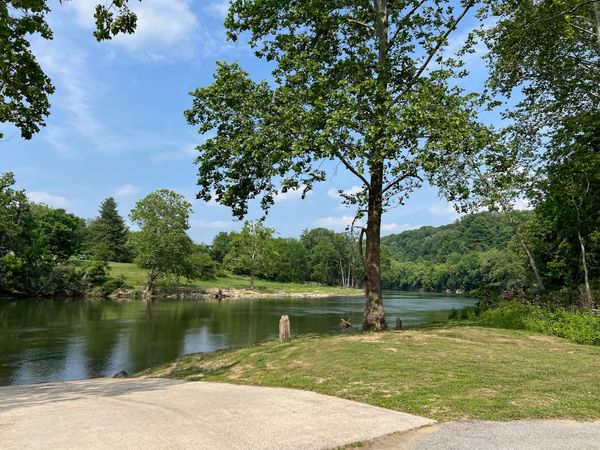
Moses Austin - Virginia's Forgotten Founding Father
When you think of Virginia, you think of George Washington and Mount Vernon, Thomas Jefferson and Monticello, James Madison and Montpelier, along with other famous Virginians. However, you usually do not think of Moses Austin as one of those other famous Virginians. But he should be considered one of them because there are not many people who helped start a new country, and one that would later become the proud and great State of Texas! Located in New River State Park and Austin Memorial Park i