Leaving Minonk

The Eiben Family and the Road to Texas
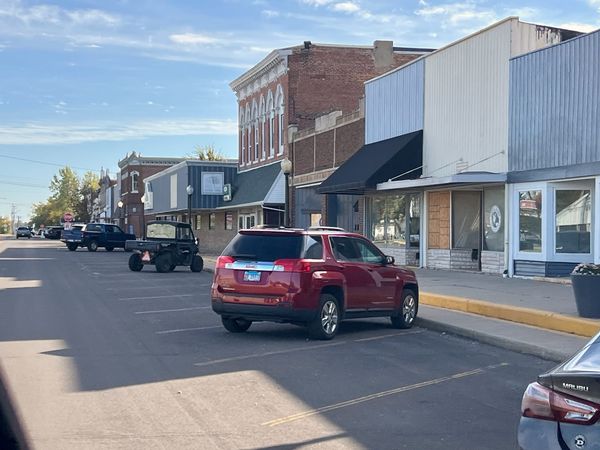
In the 1880s and 1890s, Minonk, Illinois, sat at the junction of multiple major rail lines. The city of Minonk, located in Woodford County, also had numerous new German immigrants who had come to work in the coal mines, supply lumber to the booming city of Chicago, or farm the surrounding area and nearby lands in LaSalle County.
We had decided to detour to LaSalle and Woodford Counties to research my mother-in-law's family, the Eibens. Her great-grandfather, Harms Otten "Otto" Eiben, had immigrated to this area from East Frisia (Ostfriesland) in the Kingdom of Prussia (German Empire) in 1871, likely traveling by train from the Port of Baltimore, Maryland. Family tradition said he also worked in the mines, owned farmland, and benefited from the American dream, as did most immigrants. And the railroads, which helped make this a prosperous area, continued to bring new people to it, along with those continuing on for additional opportunities in the West.
We had long wondered why, after living in this growing, prosperous area, he decided to leave for Texas around 1891. This immigrant had married and raised his children here. Why would he leave? Probably due to tuberculosis!
Family tradition holds that his wife, Anna Maria, née Ricklefs, died of tuberculosis. Unfortunately, it was probably those same railroads that brought this incurable disease of tuberculosis to Minonk. Some might have been escaping the overcrowded, unsanitary conditions in Chicago. Some may have been trying to go west for the "cure," which was rest, healthy air, and lots of sunlight. However, it is possible his wife became one of the many people who were diagnosed with this terrible disease. It wasn't until the 1900s that tuberculosis (TB) was declared a contagious disease, and research was finally being done to address it. TB can also lie dormant for years, with periods of apparent recovery punctuated by relapse — meaning Anna may have struggled with the disease long before any diagnosis
And, Coupland, Texas, matched all the "cure" criteria for Otto to move. In 1891, Coupland was a young, growing agricultural community in Williamson County, established along the Bastrop and Taylor Railroad. The community boasted many German immigrants, who shared the same culture and faith as the community Otto was leaving. Anna, however, did not live long enough after arriving in Texas to benefit from this change. She passed away on April 13, 1891. There could have also been another member of the family who was struck with this terrible disease. Their youngest child, Otto Eiben, passed away in June 1891, around two months after his mother.[1] Despite these devastating losses, Otto continued to prosper in his new home and went on to see four of his daughters and four of his sons marry and thrive in Texas!
Harms Otten "Otto" Eiben Family Bible Records 1838-1891, [Bible title, cover, or publisher not shown], family pages; imaged, Ancestry (https://www.ancestry.com/family-tree/person/tree/42352137/person/19770191516/gallery : accessed 24 December 2025); > Family Trees > Herzer2005 Family; citing "annanaus originally shared this on 1 June 2012. ↩︎
Written by
What's Next?
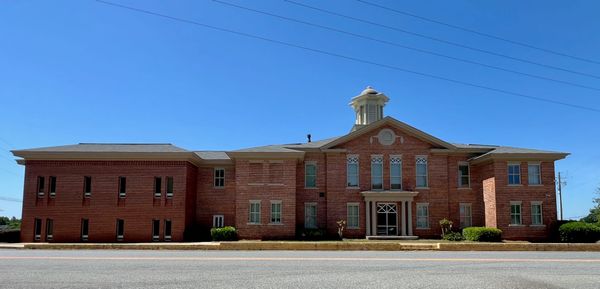
Did the Georgia Wilkinson County Courthouse Have a Curse on it?
The bane of genealogists and historians is courthouse burnings, especially those in the South. I wanted to stop by the little town of Irwinton to follow up with some possible genealogical research at the local library and historical society. I already knew about the Wilkinson County courthouse fire in 1924, but I had not realized just how many there had been. How could this county be so unlucky! But there might be a chance that there were some remnants of my McCullar and Pace families who had se
From a Secret Bunker to the Wilderness Road: Why Context Matters
Several years ago, my husband and I were with a group of businesspeople staying at the Greenbrier Resort in White Sulphur Springs, West Virginia. I really had not heard much about this place. Looking up their website, I saw that it was a resort built around the area's natural mineral springs, whose mineral-rich waters had been used for medicinal purposes by wealthy Virginians since the 1830s. The Allegheny Mountains served as the backdrop, with the large historic "white" building as the resort's