Oh no! My Ancestor's Place was Buried by TVA!

Whenever I travel to a place where my ancestors lived, I search for the land they owned, rented, or possibly just worked on. This helps me see what environment they lived and worked in, and, especially if they were farmers, it gives me "context" for what their "everyday" life was like. Their land is not always easy to find, especially if it has the old "metes and bounds" descriptions prevalent throughout the original British, French, and Spanish colonies. But if they lived in a "public land" state, like Alabama, it's pretty easy to find your ancestor's land. Or, so I thought!
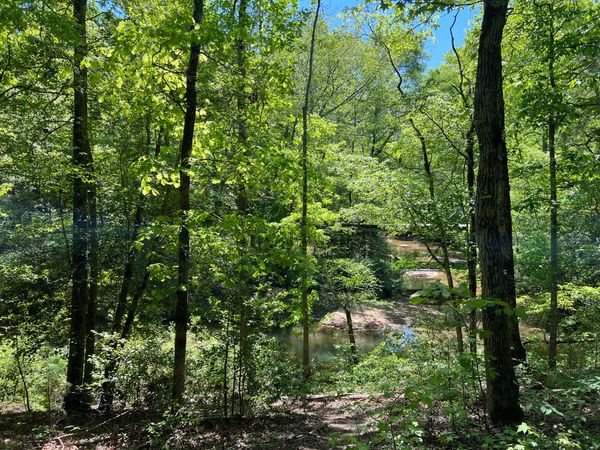
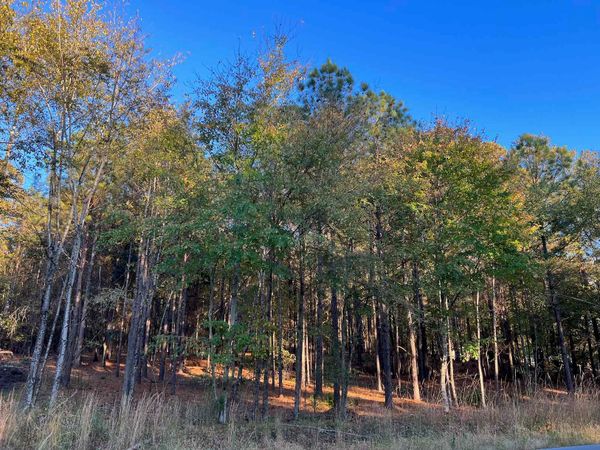
One of the surnames I have been researching for many years, Stracener, was found on the census records, starting in 1820 in St. Clair County, Alabama. Back in the 1970s, two books were written about this line, so it is fairly well documented in terms of lineage, but not in context. Thus, I wanted to see where they actually lived and to get a "feel" of the land and environment. I checked out the U.S. General Land Office website (https://glorecords.blm.gov). Henry Stracener purchased 80 acres of land in 1824 that was located in Township 18-S, Range 3-E, Section 15.[1] I then compared it to today's maps, and we headed off to see what we could find! Well, we did get to see a bit of the land they lived on, unfortunately, a lot of it was now underwater, thanks to TVA! Comparing the old plat maps on the GLO website, you can see that Section 15 was near, but not on, the old Coosa River channel.
The TVA was established in 1933 by the Federal Government "to manage river navigation, flood control, and to promote agricultural and industrial development in the region." It also brought electricity and jobs to thousands of rural and economically depressed Americans in the Southeast. However, after displacing thousands of people and after nearly 100 years, we know that today, TVA has some champions and some critics regarding its success.
Even with most of the land underwater and houses now along the shoreline, I can still walk part of it and imagine my ancestors doing the same. Since this seems to be the first land my ancestor ever owned, from what I can find, and after many years of moving from place to place and hard work, they were probably looking out and marveling at how they were also blessed to live in a country that provided this opportunity to them and their children. Six generations later, I'm one of those "children," and I feel the same way!
- Bureau of Land Management, "Land Patent Search," database with images, General Land Office Records, (https://glorecords.blm.gov/details/survey/default.aspx : accessed 1 May 2026), entry for Henry Stracener (St. Clair County, Alabama), document no. 3415 (1824).↩︎
Written by
What's Next?
Worm Gruntin' and Family Roots - Searching for Emily in Sopchoppy, Florida
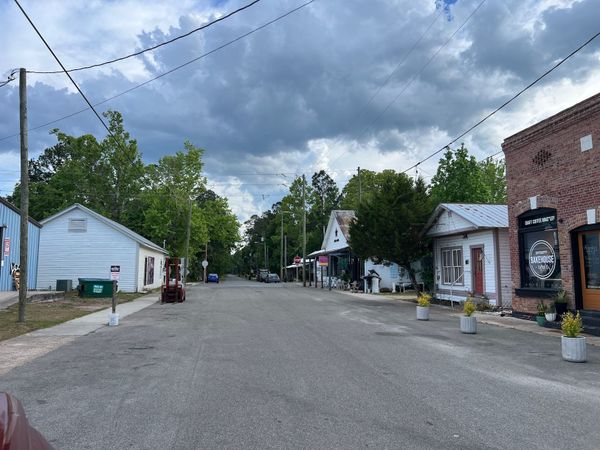
If you know where Sopchoppy, Wakulla County, Florida, is... well, you must either live there or live nearby, since it is not a very big place or known for having many famous people from the area. However, there is one thing that it is famous for, charming worms [Yes, you heard that right!] out of the ground during its annual American Worm Gruntin' Festival. It sounds like fishing must be really popular around there, eh? However, for me, Sopchoppy is famous as the place where my 2nd Great-grandmo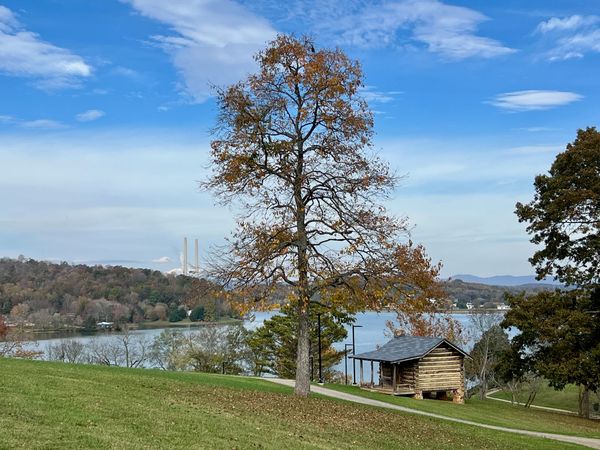
Roots, Records, and the Cherokee Nation in Roan County, Tennessee!
Tracking your ancestors' journeys is always fascinating! You never know what you'll find or learn about a place until you stop, explore, and discover the historical events that shaped it. During a stay in Kingston, Roane County, Tennessee, we decided to spend a few days checking out the courthouse and other historical sites while researching my Stracener line and their allied family, the Kuykendalls. Of course, I am always thrilled to find that a county courthouse's records were not burned! Roa