Roots, Records, and the Cherokee Nation in Roan County, Tennessee!

Tracking your ancestors' journeys is always fascinating! You never know what you'll find or learn about a place until you stop, explore, and discover the historical events that shaped it. During a stay in Kingston, Roane County, Tennessee, we decided to spend a few days checking out the courthouse and other historical sites while researching my Stracener line and their allied family, the Kuykendalls.
Of course, I am always thrilled to find that a county courthouse's records were not burned! Roane County's archives date back to 1801, and yes, I may have let out a "Yea!" when I found that out. I was looking forward to spending several days perusing those records for any reference to my Straceners, who lived there briefly before the western portion of the county was split off to form neighboring Rhea County. I deeply appreciate when a county recognizes its historical archives as something to be treasured and invests in a County Archivist or Curator to oversee these invaluable records. But this post isn't about my research trip. It's about the Cherokee Nation!
Traveling across North Carolina, South Carolina, Kentucky, Tennessee, Georgia, and Alabama has continually deepened my appreciation for Cherokee history. When the first European explorers arrived in this region, they encountered a sophisticated, settled people. The Cherokee were farmers who lived in organized villages of thirty to sixty homes, each anchored by a large central council house that served as the heart of community life. Their homes were crafted with remarkable ingenuity, woven from river cane set into circular frameworks and sealed with clay mud sourced straight from the riverbanks that still define this region today. Forward-thinking in both governance and daily life, the Cherokee adapted over time as well. As cultures began to intersect, log cabins and wood-framed houses gradually appeared across the rolling hills and river bottomlands of their territory.
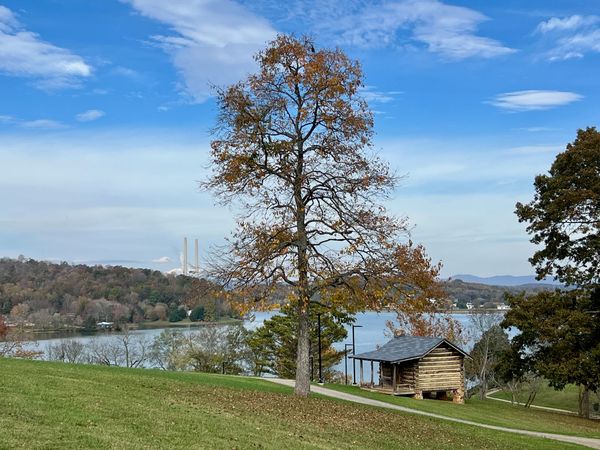
At Fort Southwest Point Park in Kingston, you can see a replica of a Cherokee log cabin alongside a breathtaking view of three rivers converging. Fort Southwest Point was established in 1792 with the intention of protecting Native lands from encroachment, yet despite that promise, continuing settler pressure, broken treaties, and forced removal ultimately led to the Trail of Tears in 1838. The Treaty of Tellico in 1805 contained a significant loophole that would ultimately undermine its purpose. In exchange for thousands of acres of Native American land, the treaty stipulated that Kingston would be named the state capital. Technically, it was honored, but only barely. Kingston held that distinction for a single day before the capital reverted back to Knoxville, a maneuver widely regarded as a material breach that gutted the treaty's original intent.[1] Today, little remains on the land itself to reflect the depth of Cherokee influence here, but you can uncover more of their story in the records at the Roane County Archives and Museum, located in the 2nd Historic Courthouse right in Kingston.
So be sure to add Kingston and Roane County, Tennessee, to your must-see list. There are even more remarkable historical events waiting to be explored, but those will have to wait for a future post!
- Jere Hall and Rachel Parker, "Roan County," Tennessee Encyclopedia (https://tennesseeencyclopedia.net/entries/roane-county/#:~:text=Roane%20County%2C%20Tennessee%20was%20established%20in%201801,made%20through%20the%20Calhoun%20Treaty%20of%201819 : 7 April 2026).↩︎
Written by
What's Next?
Oh no! My Ancestor's Place was Buried by TVA!
Whenever I travel to a place where my ancestors lived, I search for the land they owned, rented, or possibly just worked on. This helps me see what environment they lived and worked in, and, especially if they were farmers, it gives me "context" for what their "everyday" life was like. Their land is not always easy to find, especially if it has the old "metes and bounds" descriptions prevalent throughout the original British, French, and Spanish colonies. But if they lived in a "public land" sta
Maryland, Antietam, and a Possible Ancestor's Fate
I've been to Maryland several times — some trips purely for pleasure and sightseeing, others for genealogy research. One of the places we visited that has stayed with me is the site of the Civil War Battle of Antietam, also known as the Battle of Sharpsburg. Many of the young men who woke up that morning were also in Maryland for the first time. But they were not there for pleasure — they were there for war, and for many, for death. At this point, I have not confirmed any ancestors who fought i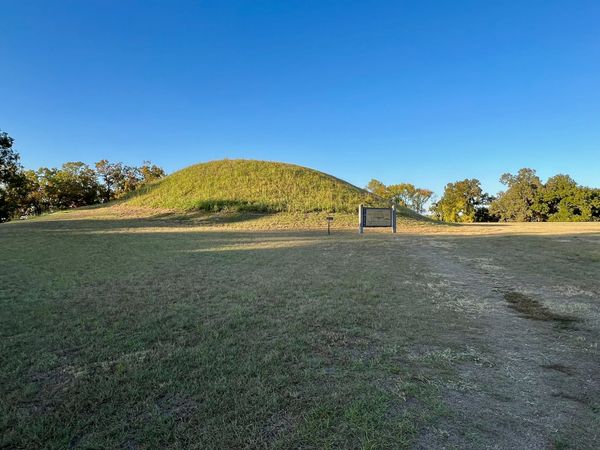
From Childhood Wonder to Ancient Lives — The Mounds That Stay With You
Traveling across the South, you see occasional road signs for Native American Mounds. We try to stop and visit each of them when we come across them. Mounds have been important to me since I was a child. We visited the LSU Campus many times since my father went to LSU, and my parents took us to the football games as soon as we were old enough to walk the long distance from the parking lot to the stadium. Two things on campus were always our favorites: Mike the Tiger and the mounds! At first, we